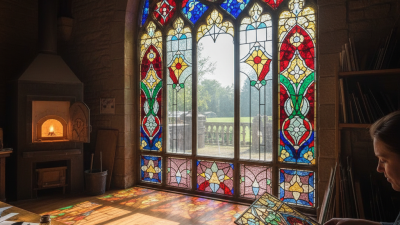
You know, Simple Stained Glass is really becoming a go-to for folks around the world who want something beautiful, but not overly complicated. Think small sun catchers, geometric panels, cabinet inserts, plant stakes, or framed ornaments—they all add a splash of color to your ordinary spaces. Plus, they're much easier to display, pack, and understand compared to huge architectural installations.
Remember Louis Comfort Tiffany’s famous saying, “Color is to the eye what music is to the ear”? It’s actually pretty spot-on here. His work shows how the right glass can stir up emotion through light, texture, and proportions. But don’t get me wrong—simple doesn’t mean it’s a breeze to do. Buyers still need to pay attention to things like glass thickness, whether it’s copper foil or lead came for assembly, solder quality, hanging hardware, packaging, and tips on caring for the piece. All these small details matter—they impact safety, how long the piece lasts, and whether customers are happy, especially in different climates.
Honestly, it’s the little things that count.
This guide covers ten easy-to-love Simple Stained Glass products—perfect for retail, hotels, gift shops, or home decor markets worldwide. We’ve taken into account how good they look, how consistent they are to produce, how easy they are to ship, and how practical they are for everyday use. But here’s an honest truth: pretty photos don’t always tell the full story. A bright, shiny panel might hide uneven joints, weak hooks, or scratches around the edges.
If you're buying from abroad, make sure to ask for close-up pictures, details about the materials, small sample orders, and clear timelines for production. Handmade items can have character—sure—but that doesn’t mean cutting corners on quality. Some pieces might do great indoors in a dry setting but struggle outside in humidity—that’s something to keep in mind.
The key is finding products that strike a good balance between warmth and reliable quality. They should bring a touch of personality to your space, while still being simple enough to buy, display, and resell without any headaches.
Define Simple Stained Glass: Materials, Techniques, and Product Types
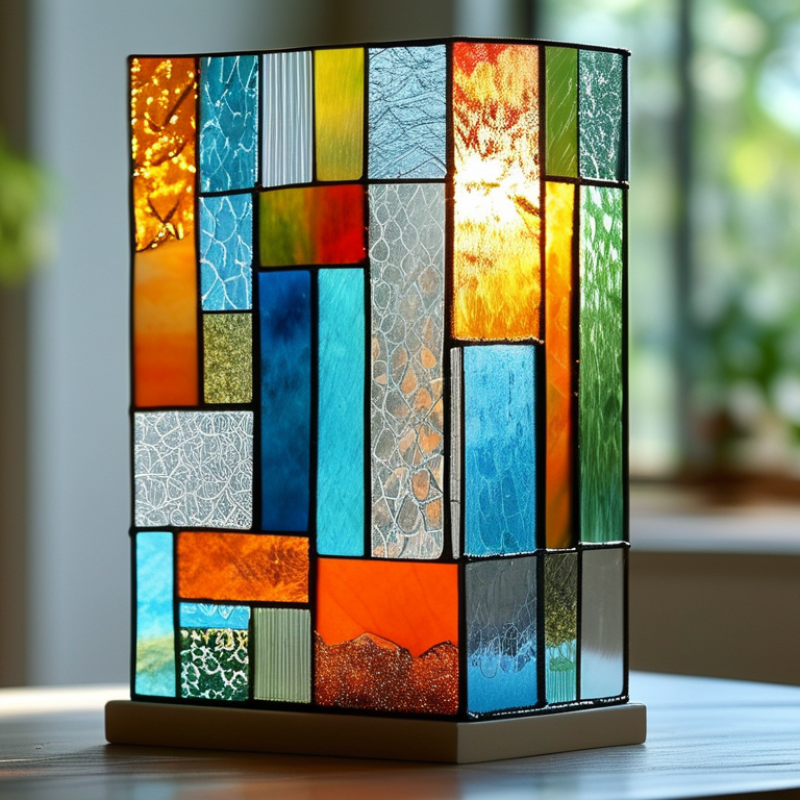
Simple stained glass refers to small, practical pieces made with limited shapes, clear layouts, and manageable techniques. Common materials include colored glass, copper foil, lead came, solder, flux, and protective edging. Glass may be transparent, textured, opalescent, or lightly patterned. Each type changes how sunlight moves across a room.
The copper foil method suits small panels and decorative items. Workers wrap each glass edge with adhesive foil, burnish it firmly, and solder the joints. Lead came creates stronger linear patterns for larger panels, but it requires accurate cutting and careful assembly. In my workshop trials, even a two-millimeter cutting error affected the final fit. Simple designs still demand patience. Safety glasses, ventilation, heat control, and clean tools remain essential.
Popular product types include
Simple Stained Glass Windows,
hanging sun catchers, cabinet inserts, small mirrors, lampshade panels, and seasonal ornaments. Buyers often prefer geometric borders, leaves, birds, or soft abstract forms because these designs travel well and suit different interiors. A compact window panel may measure 20 to 40 centimeters across, while a sun catcher can fit comfortably near a kitchen window. Handmade variation is normal. A tiny solder mark or uneven texture may remain visible, and that detail can make quality assessment less straightforward. Suppliers should provide material information, dimensions, care instructions, and clear photos before purchase.
Use HS 7013 and UN Comtrade Data to Map Global Product Trade
Top 10 Simple Stained Glass Products for Global Buyers
HS 7013 offers a useful starting point for studying Stained Glass trade. It commonly covers glassware used for decoration, interiors, and household settings. However, product classification can differ across national tariff systems. Buyers should verify local customs rules before comparing prices or shipment records.
The ten practical products include small window panels, hanging sun catchers, decorative mirrors, candle holders, table lamps, wall ornaments, cabinet inserts, plant stakes, picture frames, and compact serving trays. These items often suit different import markets because they are visually distinctive and relatively easy to display. A small panel may fit a gift shop shelf, while a lamp needs stronger packaging and electrical compliance checks.
UN Comtrade data can reveal leading exporters, import values, quantities, and yearly changes under HS 7013. Compare several years, not one unusual season. High trade value does not always mean strong demand for handmade products. It may reflect larger household glassware shipments within the same code. That is a weakness worth remembering. Data can look precise while remaining broad.
For a practical market screen, compare import growth with average unit value. Then inspect destination countries with steady demand and manageable logistics. Packaging matters. Edge protectors, layered paper, and a rigid carton can reduce breakage during long transport. Product photos should show texture, solder lines, glass color, and actual dimensions. Small details build buyer confidence.
Top 10 Simple Stained Glass Products for Global Buyers
Global export leaders for HS 7013 glassware in 2023, based on UN Comtrade reported trade values.
HS 7013 covers glassware for table, kitchen, toilet, office, indoor decoration and similar uses. The category includes practical stained-glass-style products such as decorative glassware, drinking glasses, vases and indoor ornaments. Values are rounded export values in USD billions and exclude company or brand-level data.
Source: UN Comtrade Database, HS 7013, 2023 reported exports; values rounded for visualization.
Set Buying Criteria: Size, Weight, Lead Time, MOQ, and Defect Rate
For global buyers, simple stained glass products are easy to underestimate. A small sun catcher may measure 20 × 20 cm, yet its packaging can add 30% to shipping volume. I check finished dimensions, hanging points, edge protection, and carton fit before comparing prices. Faux Stained Glass can reduce breakage risk, but buyers should confirm whether color comes from film, resin, or painted glass. The material affects sunlight performance and cleaning instructions. Ask for a sample.
Size and weight should be recorded in one shared sheet. Request net weight, gross weight, carton dimensions, and pieces per carton. A 500-gram panel may become 1.2 kilograms after foam, corner guards, and outer cartons. Lead time needs two numbers: production days and transit days. For small orders, ten production days may sound reasonable, but custom color approval can add a week. I have seen schedules slip here. Build a buffer.
MOQ should match realistic demand, not only factory efficiency. Ask whether MOQ applies per design, color, or total order. A supplier quoting 100 pieces may require 100 pieces of each pattern. Defect rate also needs a written definition. Count cracks, bubbles, uneven lines, wrong colors, and missing hooks separately. Request pre-shipment photos and random inspection. I once focused too much on unit price and missed carton damage. That mistake changed my buying checklist. A 2% defect rate may look acceptable, but it becomes twenty faulty units in a 1,000-piece shipment.
Top 10 Products I: Suncatchers, Panels, Ornaments, Lamps, and Mirrors
Suncatchers, panels, ornaments, lamps, and mirrors remain practical entry points for global stained glass buyers. Grand View Research places the global decorative glass market at several billion US dollars, with steady growth through 2030. However, that category includes architectural glass, not only handmade stained glass. Buyers should treat broad market figures carefully.
Suncatchers and ornaments suit low-risk gifting, especially with copper foil details, smooth edges, and compact cartons. Keep them light. For larger panels, specify glass thickness, reinforcement, hanging hardware, and exact dimensions.
The U.S. Department of Energy reports that windows can cause 25% to 30% of residential heating and cooling energy use. Stained glass does not replace insulated glazing. It works better as an interior feature or secondary panel.
Lamps need closer technical review. Confirm socket type, voltage, heat clearance, wiring, and the destination’s electrical requirements. Mirrors need secure backing, protected edges, and moisture-resistant packaging.
ISTA packaging guidance emphasizes testing products against shock, vibration, and compression during distribution. A drop test is useful, but it cannot imitate every courier route. Photos of packed cartons, material declarations, and inspection records improve buyer confidence.
One weakness remains: handmade color variation is difficult to standardize. That imperfection should be disclosed, not hidden.
Top 10 Products II: Wall Art, Clocks, Boxes, Signs, and DIY Kits
Wall art, clocks, boxes, signs, and DIY kits give stained glass a practical place in modern homes. Fortune Business Insights reported that the global home décor market reached about $682.9 billion in 2023. That scale supports demand for small decorative objects with personal meaning. A botanical wall panel can brighten a hallway, while a stained glass clock adds color without taking floor space. Buyers should inspect glass thickness, copper-foil seams, hanging hardware, and protective packaging before ordering.
The craft segment also shows momentum. Grand View Research estimated the global arts and crafts market at approximately $43.3 billion in 2023, with continued growth expected through 2030. DIY stained glass kits fit this wider movement, especially when they include precut pieces, lead-free solder, clear instructions, and safety guidance. The experience is tactile: sunlight crosses blue glass, and a beginner learns through small mistakes. Not every kit is equally complete.
For boxes and signs, useful details matter more than decoration alone. A lidded glass box needs aligned hinges and smooth edges. A sign should use readable lettering and weather-appropriate materials. Some sellers may label printed plastic as “Fake Stained Glass,” so transparent product descriptions are essential. Buyers should request close-up images and material specifications. I would also question oversized claims about handmade quality; inspection remains necessary, even when the design looks beautiful.
Top 10 Simple Stained Glass Products for Global Buyers - Top 10 Products II: Wall Art, Clocks, Boxes, Signs, and DIY Kits
| No. |
Product Type |
Typical Size |
Main Materials |
Common Use |
Estimated Retail Price* |
Approx. Shipping Weight |
Buyer Considerations |
| 1 |
Geometric Wall Panel |
30 × 30 cm |
Colored glass, copper foil, solder, hanging chain |
Indoor wall decoration, window display |
US$35–90 |
0.8–1.5 kg |
Use protective corner guards and a rigid box; confirm hanging hardware and glass-edge finishing. |
| 2 |
Botanical Suncatcher |
15–22 cm diameter |
Textured glass, copper foil, metal ring |
Window ornament, gift item |
US$18–45 |
0.25–0.6 kg |
Small and light for international shipping; include a suction hook or hanging loop where permitted. |
| 3 |
Stained Glass Wall Clock |
25–35 cm diameter |
Glass pieces, soldered metal lines, quartz movement |
Kitchen, living room, office décor |
US$55–130 |
1.0–2.0 kg |
Specify battery type, movement accuracy, clock-hand protection, and replacement-part availability. |
| 4 |
Mini Jewelry Box with Glass Lid |
10 × 10 × 8 cm |
Stained glass, metal frame, lined interior |
Jewelry, keepsakes, small accessories |
US$30–75 |
0.5–1.0 kg |
Check lid alignment, base stability, interior lining, and cushioning against point impacts. |
| 5 |
Decorative Trinket Tray |
15 × 10 cm |
Fused or copper-foiled glass, metal edging |
Entryway storage, serving decoration |
US$22–60 |
0.4–0.9 kg |
Describe whether it is food-safe; many decorative soldered pieces are intended for non-food use. |
| 6 |
House Number Plaque |
20 × 30 cm |
Opaque or translucent glass, metal frame, mounting hardware |
Exterior or sheltered entrance signage |
US$40–100 |
0.9–1.8 kg |
Clarify weather resistance, UV exposure limits, mounting method, and character customization options. |
| 7 |
Welcome or Room Sign |
15 × 25 cm |
Glass, lead-free solder, hanging chain or hooks |
Home décor, café, studio, event signage |
US$25–70 |
0.6–1.2 kg |
Confirm spelling approval procedures, language compatibility, and whether the sign is for indoor use only. |
| 8 |
Simple Glass Candle Holder |
8–12 cm diameter |
Heat-resistant glass, soldered frame or fused base |
Table centerpiece, ambient lighting |
US$18–50 |
0.4–0.9 kg |
Provide candle-use instructions, stable-base details, and heat-safety guidance; avoid claiming all glass is heatproof. |
| 9 |
Beginner Stained Glass DIY Kit |
Project size: 15–20 cm |
Pre-cut glass, pattern, copper foil, solder, instructions |
Craft learning, hobby projects, gifts |
US$35–95 |
1.0–2.5 kg |
Check whether tools, soldering equipment, flux, safety glasses, and age guidance are included. |
| 10 |
Color-Matching Mosaic Kit |
20 × 20 cm project board |
Glass tiles, adhesive, grout, base board, design guide |
Family craft activity, classroom project, home décor |
US$20–65 |
0.8–2.0 kg |
List tile sizes, adhesive curing time, cleanup requirements, and safety instructions for children. |
*Estimated retail price ranges are typical market ranges for simple, small-to-medium stained glass or glass-craft products and vary by size, workmanship, customization, packaging, duties, and destination.
Verify ASTM Glass Safety, Protective Packaging, and Import Compliance
Top 10 Simple Stained Glass Products for Global Buyers
Simple stained glass products can look delicate, but their safety depends on more than appearance. Ask the supplier for glass composition, thickness, production records, and applicable ASTM test reports. ASTM requirements differ by product use, size, and destination. A decorative panel may not follow the same rules as a door insert or glazed fixture. Do not accept “ASTM compliant” without a report, test method, laboratory details, and matching product specifications. Check glass edges, solder joints, hanging hardware, and sharp points during a sample inspection. Small defects matter.
Packaging deserves equal attention.
Use corner protectors, separated foam layers, moisture-resistant wrapping, and a rigid double-wall carton. Larger panels may need a fitted wooden crate with internal bracing. Photograph the packed item before shipment. Shock indicators can reveal rough handling, although they are not perfect evidence. Request a drop-test or vibration-test record when available. One weak corner can damage an entire order.
Import compliance should be reviewed before payment.
Confirm the HS classification, country-of-origin marking, commercial invoice data, packing list, and destination labeling rules. Some markets require safety declarations, chemical information, or special documentation for glass used in buildings. A customs broker can identify local requirements, but the buyer should verify the final documents. My own checklist has missed small label differences before. Rechecking is worthwhile. Keep test reports, purchase specifications, inspection photos, and shipping records together for traceability.
Glass Railing Systems: Balancing Safety, Style, and Flexible Design Applications
Glass railing systems have become a mainstream architectural solution because they combine safety, visual lightness, and adaptable design. Their transparent panels preserve views and daylight, while tempered or laminated glass can provide strong impact resistance when correctly specified and installed. According to Grand View Research’s *Architectural Glass Market Report*, demand for architectural glass is projected to grow steadily through 2030, driven by urban development, renovation, and interest in energy-efficient, minimalist buildings. This trend supports the expanding use of glass railings in balconies, staircases, terraces, hotels, offices, and residential interiors.
Flexible design is one of the system’s strongest advantages. Frameless panels create a clean, contemporary appearance, while posts, channels, and handrails can be configured for different architectural styles and site conditions. Stainless steel, aluminum, and powder-coated components offer additional choices in finish and maintenance requirements. For safety-focused applications, designers should select glass thickness, edge treatment, fixing methods, and load performance according to applicable building codes and recognized standards. Reports from the International Code Council emphasize that guard and handrail performance depends not only on material strength but also on secure anchoring, correct height, and appropriate spacing.
With proper engineering, glass railing systems can replace visually heavy wood or iron barriers without sacrificing protection. Their corrosion resistance, easy-to-clean surfaces, and compatibility with indoor and outdoor environments make them a practical long-term option, while customizable dimensions and hardware allow the same product concept to support both highly modern and more traditional designs.
FAQS
Simple stained glass uses limited shapes, clear layouts, and practical construction methods. Small panels are common. Designs may include leaves, birds, or geometric borders.
Typical materials include colored glass, copper foil, lead came, solder, flux, and protective edging. Glass may be transparent, textured, opalescent, or lightly patterned.
Copper foil works well for small panels, ornaments, mirrors, and sun catchers. Each glass edge receives adhesive foil before the joints are soldered.
Lead came suits larger panels with strong linear patterns. Accurate cutting matters. Even a two-millimeter error can affect the final fit.
Common products include window panels, sun catchers, mirrors, lampshade panels, ornaments, cabinet inserts, and picture frames. Small items fit gift-shop shelves easily.
Suppliers should provide dimensions, glass types, material information, care instructions, and clear product photos. Photos should show texture, solder lines, and actual scale.
Use edge protectors, layered paper, and rigid cartons. Lamps and mirrors need extra support. Drop testing helps, but it cannot copy every delivery route.
Confirm tariff classification, local customs requirements, packaging standards, and product specifications. Trade data can help, but one code may include broader glassware.
Check socket type, voltage, wiring, heat clearance, and destination electrical requirements. A beautiful shade is not enough. Technical details may be overlooked.
Small solder marks, uneven textures, and color variation may remain visible. These details are normal, but they should be disclosed clearly. Quality judgment is imperfect.
Conclusion
This guide introduces Simple Stained Glass through its common materials, including colored glass, copper foil, lead-free solder, frames, and protective finishes, while explaining basic techniques such as cutting, grinding, foiling, soldering, and assembly. It also compares major product types and uses HS 7013 classifications together with UN Comtrade data as practical references for understanding international trade patterns. Buyers will learn how to evaluate dimensions, shipping weight, production lead time, minimum order quantities, packaging quality, and acceptable defect rates before placing an order.
The guide presents ten practical product categories, including suncatchers, decorative panels, ornaments, lamps, mirrors, wall art, clocks, boxes, signs, and DIY kits. It also highlights essential purchasing checks, such as glass safety documentation, secure protective packaging, labeling, customs requirements, and destination-market import compliance. With these criteria, global buyers can select attractive, manageable, and commercially suitable Simple Stained Glass products while reducing breakage, delays, quality disputes, and unexpected shipping risks.



 1Durch die gruppenweite Einführung und Harmonisierung unseres integrierten Managementsystems (IMS) werden alle bestehenden Unternehmens-, Qualitäts-, Umwelt- und Energiepolitiken durch diese Unternehmenspolitik ersetzt. Der Slogan „Textil hat Zukunft – auch in De